
28.03.2025 | André Dael

28.03.2025 | André Dael

Confrontation
Three Representations of the World

Born in 1951 in Polleur (Belgium), André Dael lives and works in Liège. After studying art at Saint-Luc (Liège) and the Academy of Fine Arts in Verviers, he dedicated himself to working on paper from the late 1960s, exhibiting in Belgium and abroad.

After spending several periods abroad, he settled in Brussels in 1977 as a freelance graphic designer. In 1980, he opened the jazz club Bloomdido, which he managed until 1984. He then pursued a career in graphic design, creating posters and publications for Belgian cultural and musical institutions.

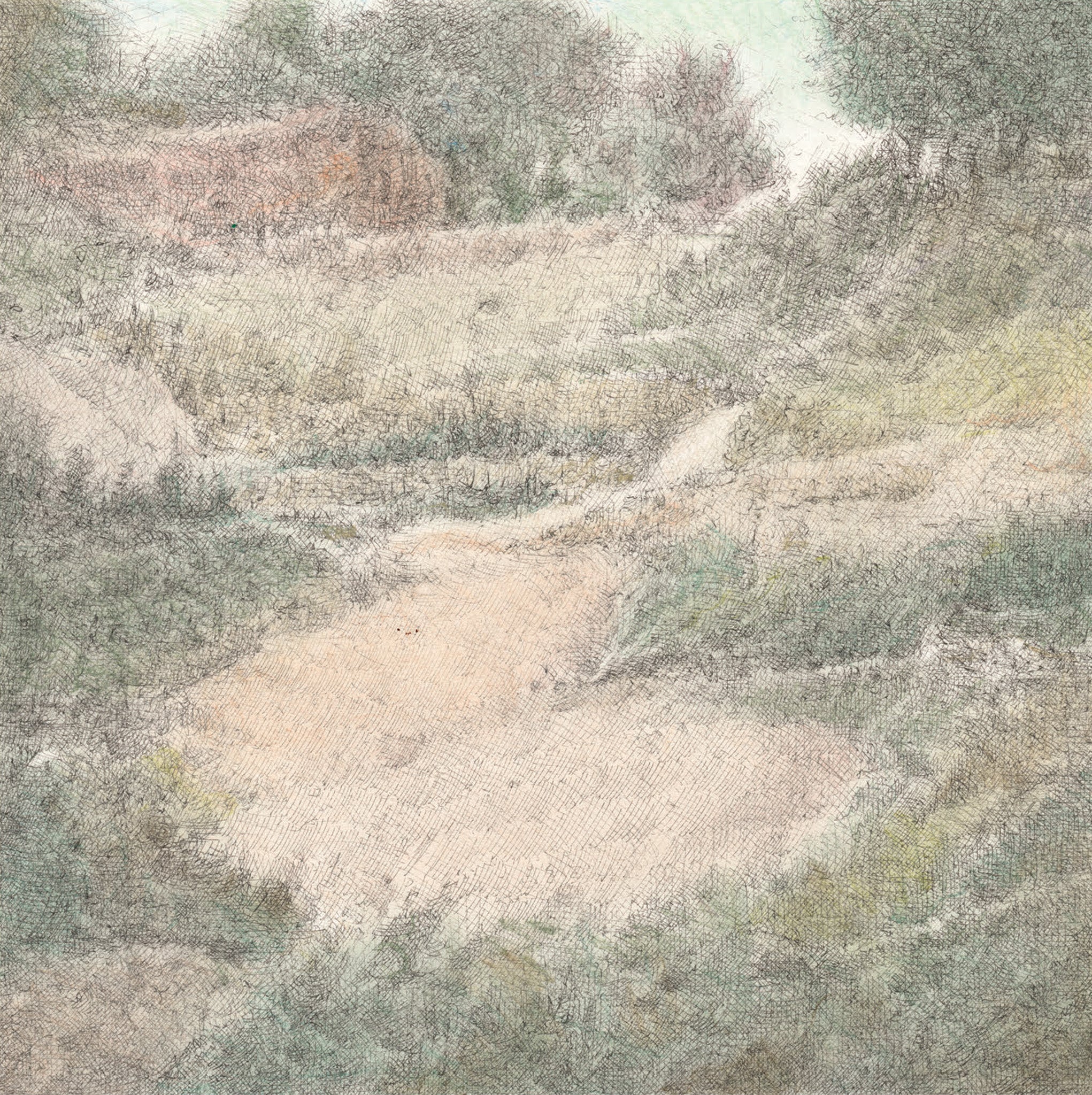
From 2008 onward, he fully resumed his artistic practice, focusing on ink and pen. His short, rapid, and precise strokes fill the paper, creating a delicate balance between emptiness and substance. At first glance, his compositions resemble intricate spiderwebs, but they gradually reveal ethereal, floating landscapes where air flows freely. Each layered stroke carries a memory, rooted in the tradition of Flemish landscapes, evoking the meticulousness of Rembrandt, the density of Dürer, and the obsessive scribbles of Michaux and Vieira da Silva.

Without monumentality or artifice, his work unfolds in the quiet intimacy of paper, inviting the viewer to engage in careful contemplation. Magnitudo Parvi—the greatness of the small.

Confrontation
Trois représentations du monde

Né en 1951 à Polleur (Belgique), André Dael vit et travaille à Liège. Après des études artistiques à Saint-Luc (Liège) et à l’Académie des Beaux-Arts de Verviers, il se consacre au travail sur papier dès la fin des années 1960, exposant en Belgique et à l’étranger.

Après plusieurs séjours à l’étranger, il s’installe à Bruxelles en 1977 comme graphiste indépendant. En 1980, il ouvre le club de jazz Bloomdido, qu’il dirige jusqu’en 1984. Il poursuit ensuite une carrière de graphiste, créant affiches et publications pour des institutions culturelles et musicales belges.

À partir de 2008, il reprend pleinement sa pratique artistique, se consacrant à l’encre et à la plume. Ses traits courts, rapides et précis couvrent le papier, créant un équilibre délicat entre vide et matière. Au premier regard, ses compositions évoquent d’intriquantes toiles d’araignée, mais elles révèlent peu à peu des paysages éthérés et flottants où l’air circule librement. Chaque trait superposé porte une mémoire, enracinée dans la tradition des paysages flamands, évoquant la minutie de Rembrandt, la densité de Dürer et les gribouillages obsessionnels de Michaux et de Vieira da Silva.

Sans monumentalité ni artifice, son œuvre se déploie dans l’intimité silencieuse du papier, invitant le regardeur à une contemplation attentive. Magnitudo Parvi — la grandeur du petit.

Confrontation
Drie voorstellingen van de wereld

André Dael werd in 1951 geboren in Polleur (België) en woont en werkt in Liège. Na een kunstopleiding aan Saint-Luc (Liège) en de Academie voor Schone Kunsten van Verviers, wijdde hij zich vanaf het einde van de jaren 1960 aan het werk op papier, met tentoonstellingen in België en in het buitenland.

Na verschillende periodes in het buitenland vestigde hij zich in 1977 als freelance grafisch ontwerper in Brussel. In 1980 opende hij de jazzclub Bloomdido, die hij tot 1984 leidde. Daarna zette hij zijn loopbaan als grafisch ontwerper voort, met affiches en publicaties voor Belgische culturele en muzikale instellingen.

Vanaf 2008 hervat hij zijn artistieke praktijk ten volle, met een focus op inkt en pen. Zijn korte, snelle en precieze lijnen vullen het papier en creëren een delicaat evenwicht tussen leegte en materie. Op het eerste gezicht doen zijn composities denken aan ingewikkelde spinnenwebben, maar geleidelijk onthullen ze ijle, zwevende landschappen waarin de lucht vrij stroomt. Elke gelaagde lijn draagt een herinnering, geworteld in de traditie van het Vlaamse landschap, en roept de nauwgezetheid van Rembrandt op, de dichtheid van Dürer, en het obsessieve gekrabbel van Michaux en Vieira da Silva.

Zonder monumentaliteit of vertoon ontvouwt zijn werk zich in de stille intimiteit van het papier, en nodigt het de beschouwer uit tot aandachtige contemplatie. Magnitudo Parvi — de grootsheid van het kleine.